Sherry is a wine from the vineyard area of Jerez, Andalucia, in southern Spain (you’ll see the appellation D.O. Jerez on the label). The word ‘Jerez’ was anglicized to Sherry by the thirsty English, who exported the wines from the region as far back as the 12th Century.
The main Sherry grape is Palomino Fino, and Pedro Ximenez and Moscatel are also found in the naturally sweet styles. Despite stereotyping of Sherry as a sweet wine, Sherry wines can be dry or sweet. Traditionally important though, after the creation of the initial light wine of around 11-12% alcohol, is that Sherry wines are then ‘fortified’. This means the wine’s alcohol is increased by the addition of neutral grape spirit (the laws have changed recently, so if a wine reaches 15% naturally through fermentation, there is no need for fortification).
Sherry is aged in a system of barrels known as a solera system, and this ageing happens either protectively, under a layer of ambient yeast known as ‘flor’, or oxidatively, without the use of flor. The style of wine is very different as a result, but very delicious!
Straight To The Practicalities…
Serving Sherry
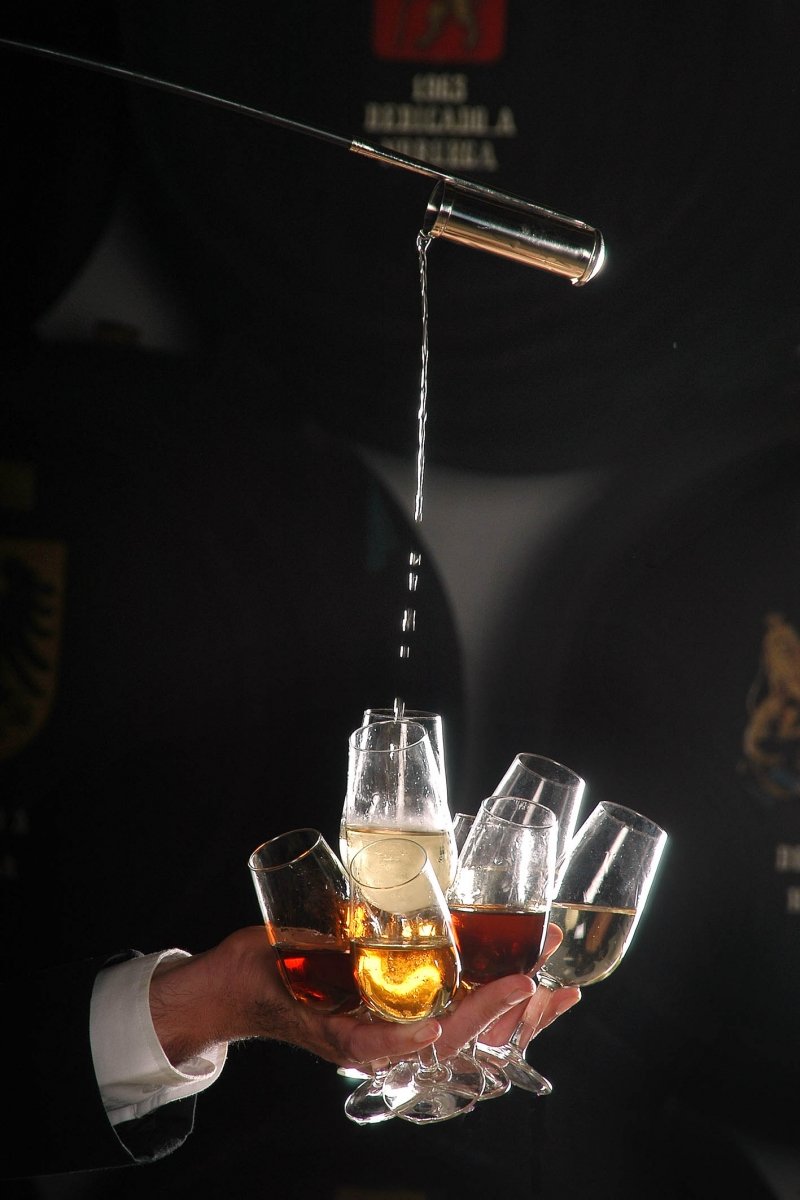
For the glass to serve your sherry in, there is a traditional Sherry glass called a copita, a tulip-shaped, small glass which you will often see when visiting the region. However, for really appreciating great sherry, try a white wine glass, with a wider bowl to ensure good exposure between oxygen and wine, and a narrow rim.
For the best temperature to serve your sherry, try Fino & Manzanilla at 6-8 degrees, nice and cold! The more complex dry sherries such as Amontillado, Palo Cortado and Oloroso should be served at 12-14 degrees, and the long aged sherries such as the Williams and Humbert 15 year olds, at 15 or 16 degrees. The sweet sherries, it does depend on your preference but normally try the Pale sweet sherries between 6 and 8 degrees, and darker ones at slightly warmer temperatures, anywhere between 10 and 14 degrees.
Storing Sherry
When the sherry bottle is open, the Finos and Manzanilla should be drunk relatively rapidly, within a week. However, the Amontillado, Oloroso and Palo cortado have some oxidative notes, are more stable and can last for longer, even 1-2 months when open. We’d still recommend storing them in the fridge, which helps the shelf life, and you can always remove them from the fridge for 20 minutes or so before serving, to warm a little, depending on the exact sherry style.
If the bottle is still sealed, then Sherry is good to keep for up to a year (Fino and Manzanilla styles), Amontillado and Oloroso for up to three years as a rule, although those aged in the cellar for longer tend to be very stable and can be kept for longer before opening.
Dry Sherry Styles
Fino & Manzanilla
These are pale-coloured, dry sherries. The young wines are fortified with grape spirit to increase the alcohol to 15% or 15%. At this alcohol level, the layer of flor grows on top of the wine while it ages in barrels. This protects the wine from oxygen, imparting a delicious freshness and subtle yeasty, nutty or salty notes. Fino wines are aged in two principle towns, Jerez de la Frontera and El Puerto de Santa Maria.
Manzanilla is a Fino wine too, but it must be aged right by the Atlantic coast, in a town called Sanlucar de Barrameda. The cool, humid conditions give a particularly fresh, pale, delicate style, with a thicker layer of flor produced compared to inland, ie even more protection against the effects of oxygen.
You may also see Manzanilla Pasada on the label, which is a very long aged manzanilla where eventually the flor dies, so there are some richer, nuttier and more oxidative notes.
Amontillado
Amontillado is a like an ‘in between’ wine, with characteristics of both Fino and Oloroso (Oloroso is described below). It is fortified first to 15%-15% and spends between 2 and 8 years ageing under flor, protected against oxygen. The wine is then deliberately fortified again to around 17 or 18%, which kills the flor, so the wine then ages oxidatively.
The result? a slightly deeper, golden/amber colour in the glass, an elegant style but a richer, nuttier flavour compared to Fino. It can be a confusing wine if you aren’t used to the style, but is delicious and fine in texture, combining both freshness and flavour, so is treasured by sherry enthusiasts!
Palo Cortado
You thought Amontillado was confusing?! Palo Cortado begins ageing protectively, under flor, but this dies off unexpectedly, early on. It is then fortified to 17-18% which stops any further likelihood of flor developing, and spends years ageing oxidatively.
In style, it is elegant and shares the fresh, nut aromas of Amontillado, but it is slightly darker. Because it spends longer ageing oxidatively than the Amontillado, the palate is more concentrated, intense, and nuttier in character; on the palate, it shows more similarity to Oloroso. Because of the quirk of how it is made, it is rare, and tends to be very good quality with excellent structure and acidity.
The name ‘Palo Cortado’ means ‘cut slash’ and refers to the distinctive chalk markings left on the barrels of this very precious sherry, so they are not confused with other, less-prized styles!
Oloroso
These are dark coloured, rich sherries, with layers and layers of nut and dried fruit flavour. Olorosos are fortified to 17% which is too alcoholic for flor to develop, so they age without the protection from oxygen that the flor provides. This oxidative ageing provides the darker colour, very nutty taste and complex array of flavours and aromas. They also have fuller body than Fino and Amontillado, with good ability to age.
En Rama
For a twist on the styles, above, you may see the expression ‘En rama’. Literally this means ‘on the branch’, but it denotes a more natural, less filtered version of Sherry (most often Fino and Manzanilla, although you may see Amontillado and Oloroso ‘En Rama’ sherries too). A lighter-filtered En Rama Sherry has slightly more body, is more intense in taste and sometimes has a slightly darker colour than the standard example.
Sweet Sherry Styles
You can divide sweet sherries into two different types:
Firstly, those made by adding sugar (in the form of grape must) to the dry sherries. You’ll see reference to Pale Cream, Medium and Cream sherries, so a Pale Cream is a Fino with added grape must, a Medium is an Amontillado with grape must and Cream is usually an Oloroso with added grape must. The Medium sherries divide further into Medium Dry and Medium Sweet (technically those with below or above 45 grams per litre of residual sugar, but both are noticeably sweet to taste).
Secondly, those known as ‘Vinos Dulces naturales’, made from Pedro Ximenez or Moscatel grapes, where the fermentation is stopped, leaving naturally unfermented sugars in the wine. In this case, the grapes are deliberately raisined, to concentrate the flavours and sugars, and evaporate any water. These concentrated, shrivelled grapes are pressed and fermented, but before the fermentation finishes, the wine is fortified, raising the alcohol and preventing further fermentation, ie significant levels of sugar remain in the wine. The result are often decadent, rich, flavourful wines with an unctuous sweet taste. They are brilliant dessert wines (Pedro Ximenez poured over vanilla ice cream is a classic match), but otherwise make a great replacement for dessert itself, sipped slowly over the evening!